Students with behaviours of concern do best when school feels predictable, safe and connected, and when home, school and the practitioner work from the same plan.
Strategies that help in the classroom
- Predictable routines and a visual timetable
- Warnings and visual timers before transitions
- A quiet space the student can go to before things escalate
- Planned movement and sensory breaks
- One trusted adult the student can go to
- Clear, short instructions with visual supports
- Adjusted work demands on hard days
When a student is escalating
Lower your voice and your demands. Give space and time. Avoid public consequences, arguments or lots of questions. Focus on safety and calm, then reconnect and repair once the student is settled.
Working as one team
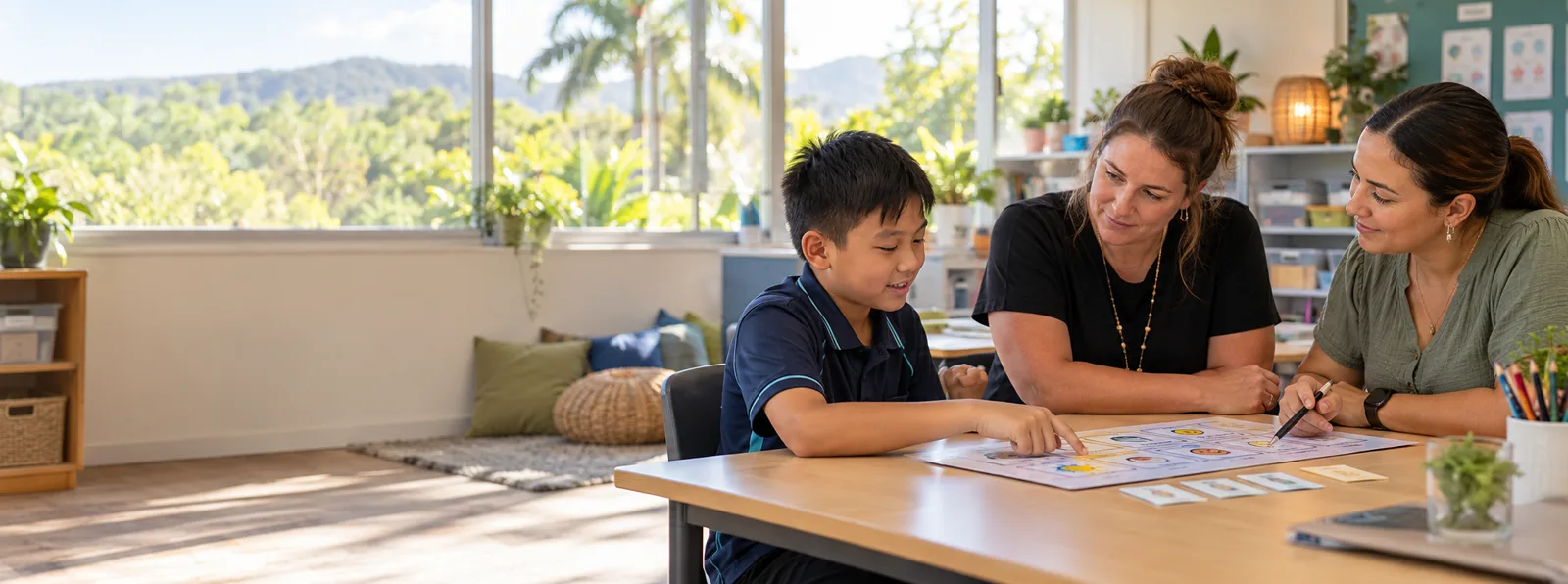
With family consent, behaviour support practitioners can observe at school, join planning meetings and share strategies with teachers and education assistants. When everyone responds the same way, students learn faster that they are safe.
School refusal and distress about school
Many students who struggle at school are anxious, overwhelmed or having sensory difficulties. Looking at what happens before and during school, and making gradual, supported changes, usually helps more than pressure.
This guide is general information only. It is not medical or legal advice. Talk with us about your situation.