Home / Positive Behaviour Support
What is Positive Behaviour Support?
Positive Behaviour Support (PBS) is an evidence-based approach to understanding behaviour and making positive, lasting change.
It works with the person and the people around them to improve wellbeing, uphold their rights and change the environment so it meets their needs. PBS does not use punishment or harmful methods, and it aims to reduce, and wherever possible remove, the use of restrictive practices.

Positive Behaviour Support is not about controlling a person. It is about understanding what they may be communicating.
We look for unmet needs and create practical supports that help people feel safer, more understood and more able to take part in everyday life.
What to expect
How behaviour support works under the NDIS
NDIS behaviour support follows the NDIS (Restrictive Practices and Behaviour Support) Rules 2018. These are the steps and timeframes you can expect from us.
- Service agreement and consentWe talk about your needs, agree in writing on what we will provide, and ask your permission before speaking with others who support you. How funding works
- Interim Behaviour Support Plan, within 1 monthWhere it is needed, a short-term plan that describes behaviours of concern and sets out ways to keep everyone safe and manage risks while we complete the assessment. Not sure where to start?
- Functional Behaviour AssessmentWe spend time with the person, talk with the people in their life, read reports, look at data and observe the environments around them. There is no set timeframe; it takes as long as it needs to.
- Comprehensive Behaviour Support Plan, within 6 monthsBuilt from the assessment and written with you. It uses proactive strategies, changes to environments and skill-building, and explains how to respond when behaviours of concern occur.
- Training and putting the plan into actionWe coach families, support workers, teachers and educators so everyone knows how and when to use the plan, and what their role is. Support for families and schools
- Monitoring and review, at least every 12 monthsWe check what is working and what isn’t, update the plan with you, and reduce or stop restrictive practices wherever possible. About restrictive practices


Behaviour as communication
Behaviour that worries people usually has a reason. It might be pain, overwhelm, a sensory need, not being understood, a change in routine or something the person needs to get away from.
When we understand the reason, we can change the situation, teach new skills and respond in ways that help, rather than simply trying to stop the behaviour.
Quality of life comes first
Success is not only less behaviour of concern. It is more good days: more connection, more choice, more participation at home, school, work and in the community, and more safety for everyone.
Plans are built around the person’s strengths, culture, communication and what matters to them.
Key terms
Words you will hear
Behaviours of concern
Actions that may be unsafe for the person or others, such as self-injury, hitting others or damaging property. They are often a sign that a need is not being met.
Functional Behaviour Assessment
The process of getting to know the person and their world to understand what is happening, when, and why. It shapes every strategy in the plan.
Behaviour Support Plan
A written plan, developed with the person and their supporters, that explains behaviours of concern and sets out strategies to meet needs, build skills and keep everyone safe.
Restrictive practices
Measures that limit a person’s movement or choices to stop or change behaviour. They must be a last resort, used for the shortest time possible, and they are strictly regulated.
A good plan
What goes into a Behaviour Support Plan
- A picture of the person: strengths, interests, communication, culture and what a good life looks like for them
- The behaviours of concern, described clearly and without judgement
- Why the behaviours are likely happening, based on the assessment
- Changes to environments, routines and expectations at home, school, work or in the community
- New skills to teach, such as communication, coping and regulation
- Calm, consistent responses and safety steps when behaviours do occur
- Any restrictive practices, with a clear plan to reduce and remove them
- Who does what, and how progress will be measured
Working together
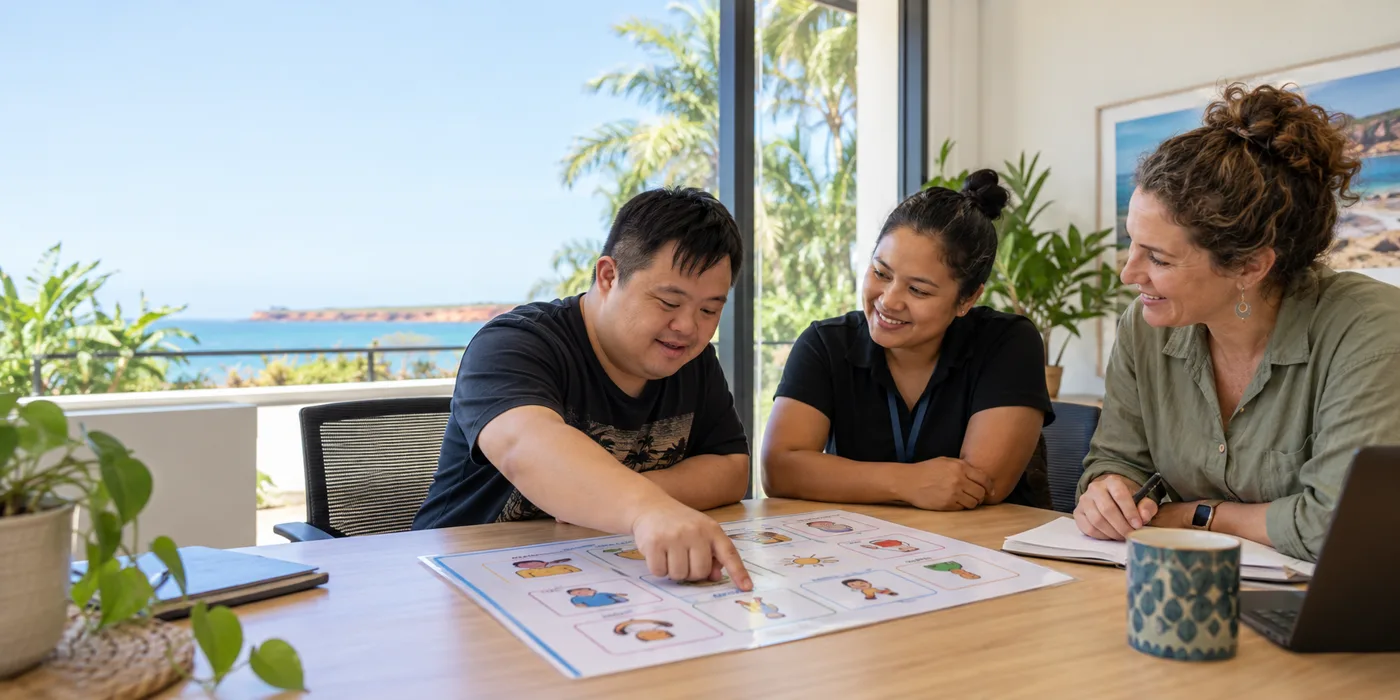
Plans are written with you, not about you
The person is at the centre of the process. You can ask questions, have a say in what matters to you, and decide who else is involved.
With permission, we work with families, carers, support workers, schools, early learning services and allied health so that everyone is working towards the same goals.
Plans are written in plain language so they can be used on a busy day, not left in a folder.

Restrictive practices
The five regulated restrictive practices
Restrictive practices limit where a person can go and what they can do, so they can affect their human rights. Under the NDIS, five types are regulated.
Seclusion
Keeping a person alone in a room or space they cannot leave, or are led to believe they cannot leave.
Chemical restraint
Using medication mainly to influence a person’s behaviour, rather than to treat a diagnosed mental or physical condition.
Mechanical restraint
Using a device to prevent, restrict or subdue movement in order to influence behaviour, rather than for a therapeutic purpose.
Physical restraint
Using physical force to prevent, restrict or subdue movement in order to influence behaviour.
Environmental restraint
Restricting free access to parts of the environment, items or activities, such as locked doors, cupboards or fridges.
The rules that apply
- Used only as a last resort, and for the shortest time possible
- Included in a Behaviour Support Plan, with a copy given to the NDIS Commission
- Authorised under the state or territory process where required; in Western Australia this is set by the WA Government
- Use is reported regularly by implementing providers, and use outside the plan must be reported to the NDIS Commission
How we help
We help families and providers identify restrictive practices, understand their obligations and build safer alternatives, without blame. Our goal is always fewer restrictions and a better quality of life.
Your rights
You have a say
- Be at the centre of your plan and be listened to
- Give or withhold consent for information to be shared
- Choose your behaviour support provider, and change if it is not working
- Have someone you trust with you at meetings
- Raise concerns with us, or make a complaint to the NDIS Commission on 1800 035 544
Practitioners
Who provides behaviour support
NDIS behaviour support practitioners must be considered suitable by the NDIS Commission. Their skills are assessed against the Positive Behaviour Support Capability Framework, which describes four levels: core, proficient, advanced and specialist.
Meg also trains and supervises Behaviour Support Practitioners across Australia through ConnectFirst™, online training and supervision for Behaviour Support Practitioners.
Our team includes Meg Hughes, Specialist Behaviour Support Practitioner, and Jo Butler, Proficient Behaviour Support Practitioner. Services are delivered under the NDIS registration of Assist Disability Services Pty Ltd.
Support where life happens
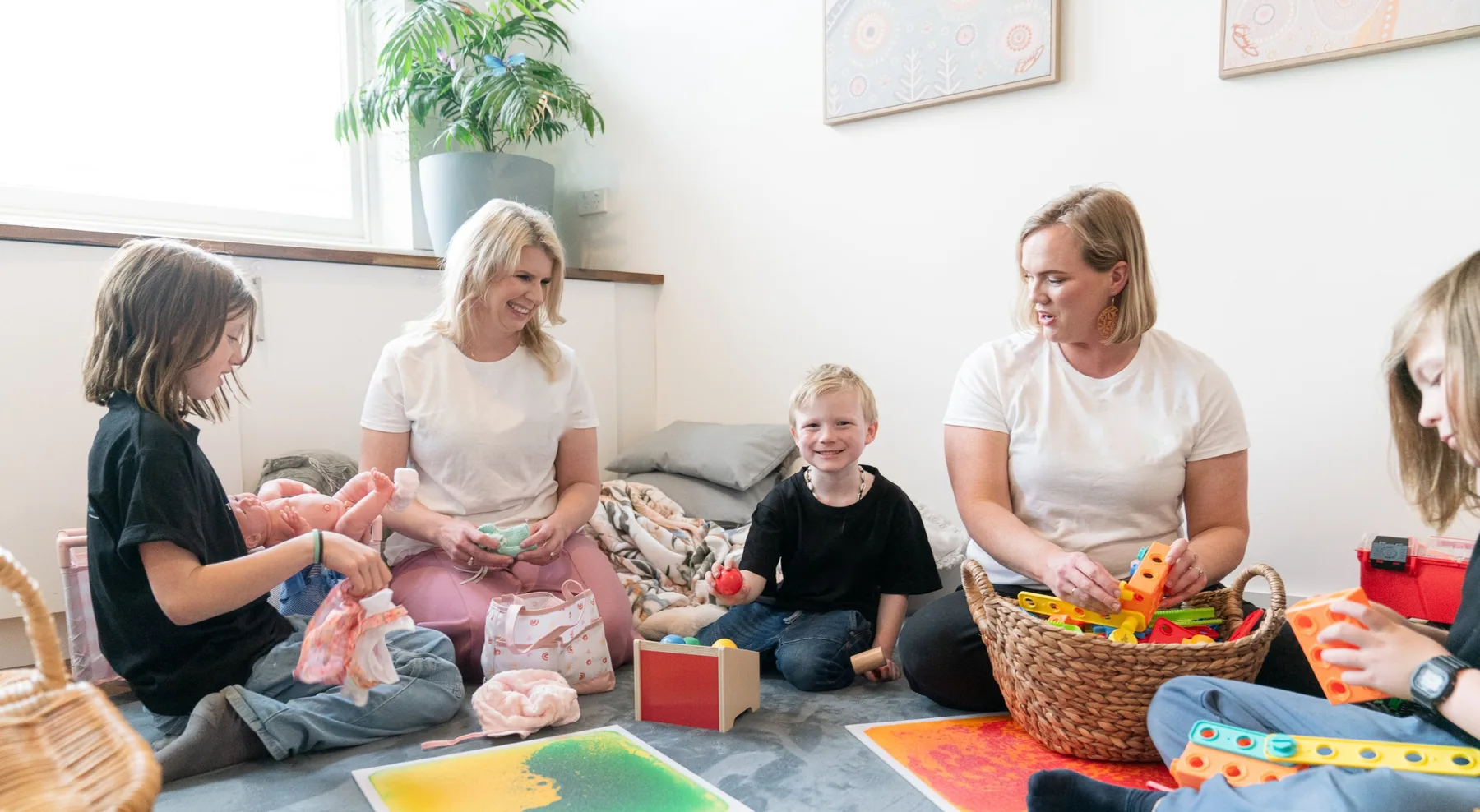
- Home visits
- In-person appointments in Broome
- Telehealth and online appointments
- School observations and meetings
- Workplace, day-program and community observations
- Support-team meetings and training
- Online coaching for families and support workers
Telehealth across the North West
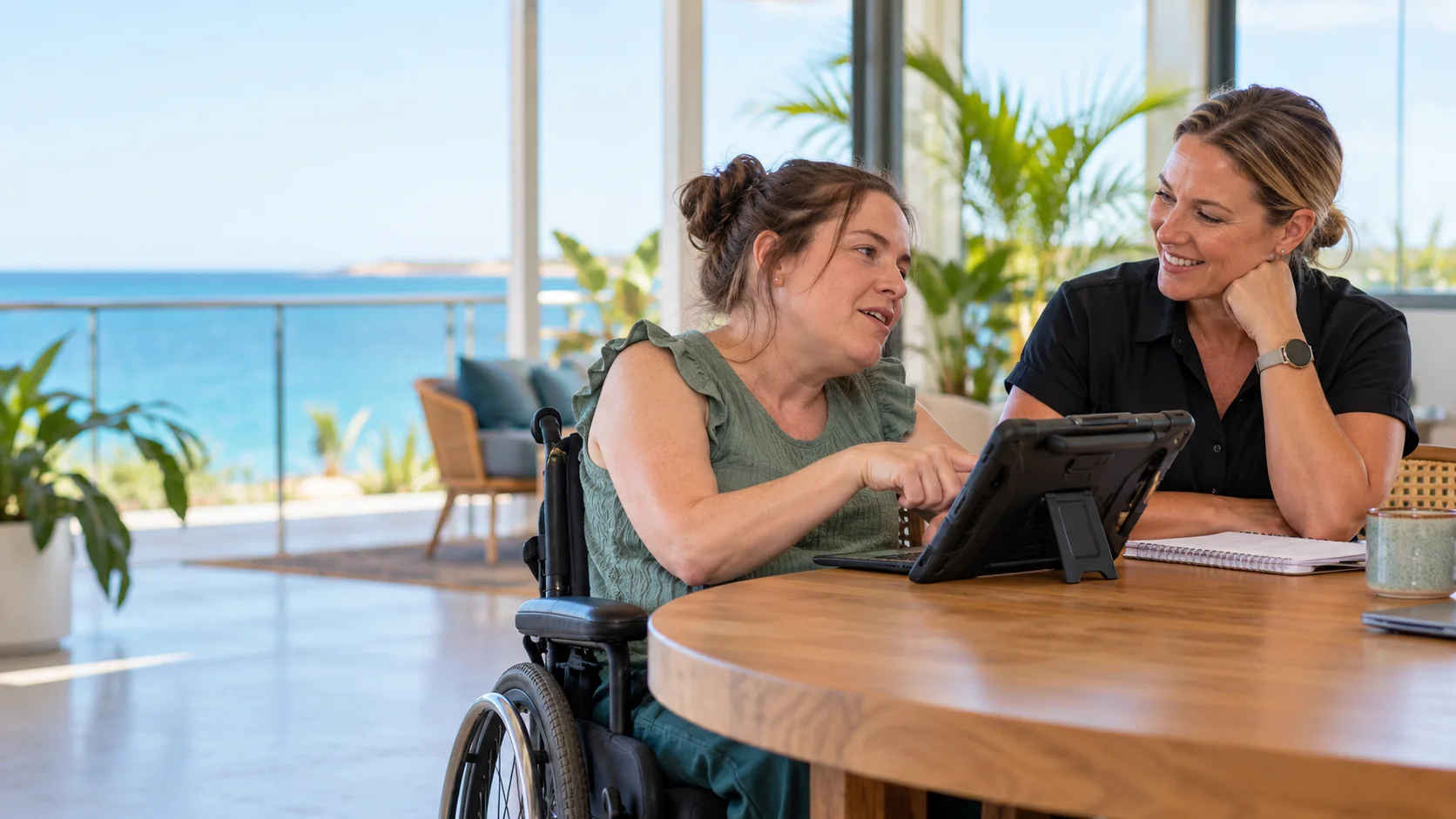
Positive Behaviour Support can be delivered well online. We use video sessions, short video clips shared with consent, phone calls and coaching in your own home, alongside in-person visits where they are needed.
Read more from the NDIS Commission
For families
Positive Behaviour Support for families
The WA Department of Communities describes Positive Behaviour Support as “a human rights-based framework for reducing behaviours of concern and increasing quality of life outcomes” for people with disability and the people who support them.
It also says that “PBS is the responsibility of everyone, not just behaviour support practitioners.” That means you are part of the team. You know your child or family member best, and the plan only works if it works in your home.
Read the WA Department of Communities guide to Positive Behaviour Support (PDF)

Rights come first
Support is person-centred, protects choice and dignity, and works to reduce and remove restrictive practices.
Understanding the why
We look at health, feelings, communication, sensory needs, relationships and environment to work out what a behaviour may be communicating.
Capable environments
Small changes to routines, spaces and how people respond often make the biggest difference. WA guidance calls these “Capable Environments”.
Plans that are checked
Strategies are tried, measured and reviewed with you, and changed when something isn’t working.
How families help
- Share what a good day and a hard day look like
- Notice patterns: time of day, places, people, sleep, hunger, noise
- Try strategies at home and tell us honestly how they went
- Help us include school, day care, support workers and extended family
- Look after yourself too. Caring is demanding, and support for you counts
Funding in your NDIS plan
In older plans, behaviour support sits in the Improved Relationships budget. In newer (PACE) plans it has its own Behaviour Support budget.
- Behaviour support can’t be claimed from other budgets, such as Improved Daily Living
- Make sure it is funded in the plan before an assessment starts
- If you need social skills support as well, raise both at your planning meeting
Leap in!: Improved Relationships explained · Our funding page
If you’re not happy with your support
- Talk to someone you trust about what to do next
- If you feel safe to, raise it with the provider first
- You can make a complaint, or change providers at any time
- You decide what information is shared with a new provider
NDIS Commission: 1800 035 544
Report an issue or make a complaint
The WA Department of Communities Behaviour Support Consultancy Team can be reached on 1800 176 888 (free call) or ARP@communities.wa.gov.au.
Useful links
Trusted information for families
Links open on other websites. We are not responsible for their content.
Behaviour support in WA and the NDIS
- WA Department of Communities: Positive Behaviour Support (PDF)
What PBS is and how it is practised in WA - NDIS Commission: Behaviour Support and Restrictive Practices Policy (PDF)
Behaviours of concern and regulated restrictive practices - NDIS Commission: Regulated restrictive practices, Easy Read (PDF)
A plain-language guide to share with family - NDIS Commission: Report an issue or make a complaint
- NDIS Commission: What to do if you are not happy with your behaviour support (PDF)
Participant fact sheet 5 - Leap in!: Improved Relationships budget explained
How behaviour support is funded
Family wellbeing
- Emerging Minds Families
Free online pathways for parents supporting children’s mental health - PACFA: Find a Therapist
Find a registered counsellor or psychotherapist
Play therapy
- APPTA (Australasia Pacific Play Therapy Association)
The professional body for play therapy in Australia - Association for Play Therapy (US)
- UNT Center for Play Therapy
Where Child-Centered Play Therapy was developed and researched - Child-Centered Play Therapy: evidence review
US Title IV-E Prevention Services Clearinghouse - BAPT: What is play therapy?
British Association of Play Therapists - Play Therapy UK: What is play therapy?
Who we support
Positive Behaviour Support for every age

Children and families
Meltdowns, school distress, routines, sensory needs and family stress.
Children & families →
Adults
Adults living with family, independently or in Supported Independent Living.
Adults →
Families and providers using restrictive practices
Safer alternatives and a clear plan to reduce restrictions, without blame.
Restrictive practices →Near you
Positive Behaviour Support across North West WA
In person from Broome and by telehealth across the Kimberley, Pilbara and Gascoyne.
- Positive Behaviour Support Broome
- Positive Behaviour Support Kimberley
- Positive Behaviour Support Pilbara
- Positive Behaviour Support Karratha
- Positive Behaviour Support Port Hedland
- Positive Behaviour Support Carnarvon
- Positive Behaviour Support Onslow
- Positive Behaviour Support Exmouth
- Positive Behaviour Support North West WA
Talk with us about Positive Behaviour Support
Call 1800 246 808, or send a referral and we will be in touch.